
How to Use AI to pay down your marketing debt
This month’s blog article is by Catherine Sietkiewicz. Catherine is a senior marketing and commercial leader with experience across ASX-listed companies, global education providers, not-for-profit, government and high-growth SaaS. She’s the founder and editor of New Vacancy, an independent publication exploring how technology shapes everyday life.
Dear reader, there is a much longer title I considered for this article. It went something like:
"How to use AI without feeling like you're falling behind every day because apparently everyone else already has an agent army automating repetitive manual tasks, a 14-step workflow, and a personal GPT named Craig—and hang on, what does this mean for my creativity, my actual wild and precious life? And also, those data centres sure seem loud and thirsty!—while you're just trying to market a business, survive school pickup, fold laundry, and figure out what's for dinner."
I cut it for space. But the sentiment remains.
What is marketing debt?
Marketing debt is a term borrowed from software engineering. In software, technical debt describes the hidden cost of shortcuts taken to ship something faster. They’re decisions that solve an immediate problem but usually create more work later.
The same pattern shows up in how people market their work, whether you’re running a team, building a business, or just trying to keep customers coming in.
After 15 years working in and leading marketing teams in everything from small businesses to global enterprises, I’ve seen this ‘debt’ accumulate everywhere:
Metadata never gets written.
Product images are uploaded without alt text, making them invisible to search engines and inaccessible to people using screen readers.
Email templates are written in the tone of the last rebrand. Or worse, there’s no consistent tone at all.
A/B tests were meant to happen but never did, meaning budget decisions are based on “the vibe.”
None of this debt feels urgent. None of it is as exciting as a new campaign, a new offer, a new channel or, dare we, a new logo. It’s the hidden operational mess that sits underneath everything else, quietly compounding like unpaid credit card interest.
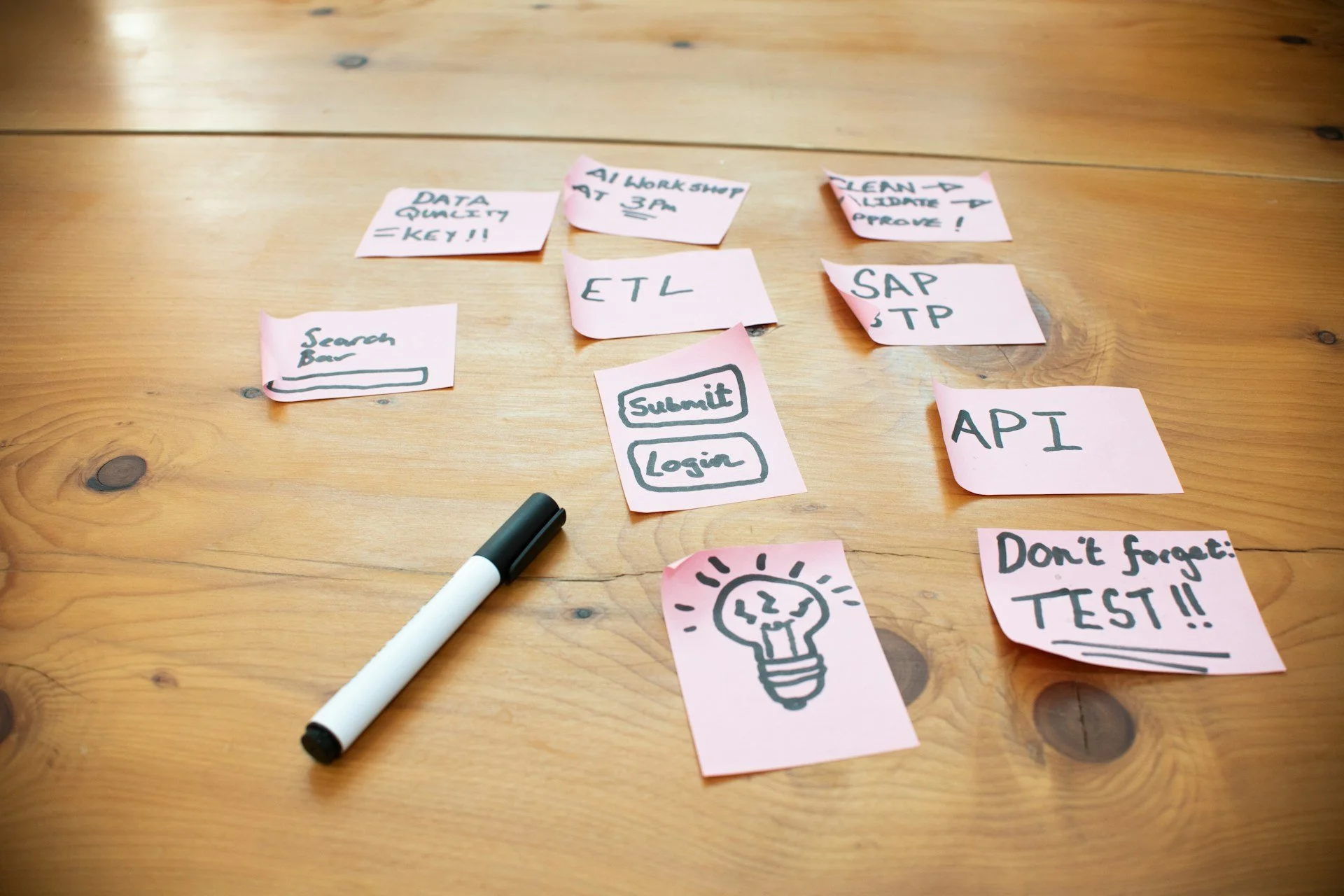
The 80/20 rule
Effective engineering teams often dedicate around 20% of their time to debt repayment: fixing the things that were done quickly in order to get something out the door.
Most marketers don’t do this.
Instead, it’s always forward motion:
new post,
a new offer,
a new website section,
a new ad,
a new logo,
a new idea,
a new platform.
But marketing tends to work better when you occasionally stop adding and start repairing.
Let’s borrow from engineering thinking. A useful rule of thumb might be spending 80% on moving forward, and 20% on paying down the accumulated backlog that slows everything else down.
If you can get marketing debt out of your head and onto an actual list, AI turns out to be surprisingly good at clearing it. This is because most marketing debt consists of tasks that are repetitive and rules based—the kind of work that AI is actually good at.
How to pay two types of marketing debt with AI
A/B Copy Variants
Maybe it's you. Maybe it's a team. Either way, someone was meant to test the subject line. It got deprioritised because something was on fire. The original has been running for months. No one is quite sure if it's working, but it's fiiiine, probably, maybe, let's not look too closely.
Here's what you do. Take whatever you're currently sending and paste it into an AI tool like Claude or ChatGPT and ask for five alternatives, each pulling a different lever.
Let's say it's "New arrivals just landed”.
Urgency: Last chance to shop the new drop.
Curiosity: You haven't seen this yet.
Specificity: 12 new styles, just in.
Direct offer: New in, and 20% off if you're quick.
The more context you give it—your product, your tone, who you're talking to—the more useful the output. But it’s worth knowing: AI generated content tends toward the average. It will give you competent and serviceable, before it gives you surprising and captivating.
For copy that genuinely stops someone mid-scroll, human creative instinct still has the edge. Use AI to generate the options, but use your own judgment (or your creative partner’s) to know which one might actually engage a customer.
Pick two. Test them somewhere simple like email, ads or social, and let real audience behaviour decide the winner.
SEO Metadata and Alt Text
Stay with me on this.
Every page on your website has two layers. The front layer is what visitors see—the copy, the images, the design. The second layer is invisible to them, but not to search engines, or to people who use screen readers.
This second layer is metadata: a title and description that tells search engines what your page is about, and alt text that describes your images in words. Most websites have it half-finished. Images get labelled 'image001.jpg.' and description fields get ignored. It's usually a planning and prioritisation problem. An accessible web doesn't happen by accident.
Here's what you do:
Take a page that looks good but hasn't been touched in a while.
Paste the copy into an AI tool, give it the keywords you're trying to rank for, and ask it to write a meta title, meta description, and alt text for each image.
Review it, adjust it to sound like you, and use it.
AI can write the metadata but it can't tell you very well which keywords to target in the first place. That research is still best done with a dedicated tool like Semrush, which has its own AI tools built in now if you want to stay in one place.
The accessibility case is reason enough. Better search visibility, and lower ad costs over time are the bonus.

A different kind of debt
It’s worth acknowledging that AI has costs that don’t appear on your invoice. These include energy use, environmental impacts, ongoing questions about training data, and intellectual property. The data centres really are loud and thirsty. None of these costs are neatly reconciled.
But you can use AI intentionally—for the backlog that’s been sitting on your list since Q2 while you’ve been doing everything else. Not as a replacement for the creative instinct that makes your brand sound like you, but as a way to clear enough space for it to actually show up again.
After all, your customers are juggling the same things you are.
We’re distracted, busy, making decisions on too little sleep, overcorrecting with too much coffee, and listening to too many K-pop Demon Hunters songs on repeat. Good marketing has always required a human understanding of that.
Underneath all the tools, workflows, and agents named Craig, people are still just trying to get through the day.
And figure out what’s for dinner.
